₹25 Lakh Salary, Still Feeling Broke? How Much Should You Save, Spend & Invest?
A good salary doesn’t always feel like financial freedom. Sachin Kabra and Bedant Sahoo discuss cash flow, lifestyle, EMIs and finding room to both invest and enjoy your life.
Published Read the transcript ↓
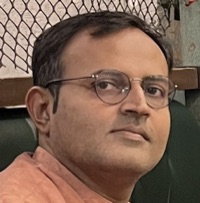

The full conversation
Podcast transcript
With Sachin Kabra, host, and Bedant Sahoo, guest. Topic headings have been added for easier reading; the conversation text is reproduced as supplied.
Opening highlights
Bedant Sahoo
Having a good lifestyle is very different from owning assets. People say real estate is an asset which appreciates. No, it doesn’t. People are living the dream.
To live a good lifestyle, you don’t have to necessarily own assets.
The only statement which matters: cash is king.
Do not say, “My portfolio is this much, my house is ₹4 crore.” Assets and liabilities come later. What is your cash flow?
If you’re 30 and you have one or two kids, I think around 15% to 25% of your income should be invested.
The moment the income goes up by 20%, your investment should go up by around 13% to 14%.
Forget about life planning. Forget about retirement planning. Start doing a very simple thing: cash flow for the next two years. That’s it.
Why a good salary can still feel stretched
Sachin Kabra
₹25 lakh a year. On paper, it sounds like a very good salary. You should be investing, you should be spending, occasionally taking a vacation, paying a couple of EMIs.
But talk to people in their 30s and 40s and you will see a completely different story. A lot of them would actually be feeling broke.
So the question probably is: Is ₹25 lakh not a good enough salary in a metro? Is lifestyle inflation going through the roof? Or is ₹25 lakh enough, but they are not able to manage their cash flows, or the financial planning is not done properly? Or is something missing?
To have this exact conversation, we have Bedant Sahu here. He began his career in the IT industry, worked in India and globally, then did his MBA from XLRI and moved into financial services. He worked with some of the leading financial services names in the country and now he is the founder and partner at FinIntent Advisors, a SEBI-registered investment advisory firm.
Welcome, Bedant.
Bedant Sahoo
Thank you.
Sachin Kabra
I’m sure you must be talking to people in the 30–35 kind of age range, earning a decent ₹25 lakh salary. But do you see them having that broke kind of a feeling? How do you see it?
Bedant Sahoo
Many of them. There’s always a question mark in their mind. There is a feeling of uncertainty in their mind about whether they’re financially doing good or bad.
On top of that, in the last two or three years, with the pressure on job security increasing in India, which was not there 10 or 15 years back, things have changed.
We used to hear that in the US people used to get fired, then they would struggle for a few months and then get a job. That was not there in India, especially in the IT industry. It was not at all there.
What was very common in the US is nowadays happening in almost all industries here. Whether it is IT or banking, you can see people going through it.
That has also worsened the situation in the last two or three years. People are getting more and more insecure. They are more uncertain about whether they are financially doing good or bad.
So many times, yes, we come across people who are going through that phase.
Sachin Kabra
But what you’re trying to say is, is it more of a psychological thought that they are having, or is it the inflation in their lifestyle which is leading to that point where ₹25 lakh looks too low?
Bedant Sahoo
It is a mix of both, but I think the psychological part plays a bigger role than the reality.
A typical example: suppose one morning you wake up, you go to the washroom and suddenly see a big mole here. Unless you know what the mole is about, you keep thinking, “Is this cancer? Is this a tumour? Is this benign? Is this something else?”
Many times what happens is, you actually postpone going to the doctor and keep suffering and thinking every time you see it, “Maybe something is wrong with me.”
That is the phase I see. Instead of finding answers.
The answers can be negative, no doubt about it, because inflation is there. Many times, genuinely, people’s finances are also not in good shape.
For example, we met a client. Husband and wife both work, and they have a kid. But their finances are not in good shape because the mother of the person got hospitalised three years back.
There was no insurance and the bill was enormous. So they had to take a loan for that medical treatment and they’re still paying the EMI.
But that’s a one-off situation where things are really, really bad and things are out of your control. It’s nothing to do with lifestyle, nothing to do with inflation. It’s just a situation which puts you in a very uncomfortable position.
That can be planned differently.
Life stage, lifestyle and EMIs
Sachin Kabra
Let’s say somebody walks to you with a ₹25 lakh salary. What would be your first three questions? What would you want to know from him to gauge how things are going?
Bedant Sahoo
For me, the most important factor is: what is your life stage?
Are you single? There are 25-year-olds earning ₹25 lakh a year and not married.
Then there are married people with no kids. That’s another phase.
Then married with two young kids. The son is six, the daughter is three. That’s another phase.
Another phase is you’re earning ₹25 lakh but your kids are almost teenagers. They will do their graduation in two or three years.
And another phase is you’re earning ₹25 lakh but you’re 55 or 56. So the study expenses of your children are over and they’re fairly independent.
For me, the first important question is which life stage you are in. That gives you a lot of idea about what kind of compromise, if required, I can ask the client to make to improve his finances.
For example, the worst phase financially is actually when you are in your mid-30s and you have two kids.
In that phase, I think it is okay to be a little uncomfortable with your finances because expenses will be higher no matter what.
You will have one home loan, one car loan, two kids are going to school. Even if you wish, you cannot avoid a vacation.
My son, during March, is not concerned about his final exam. He’s concerned about what reward he will get after that.
When you are single, or you are 55 and your kids are independent, taking decisions is a bit easier. You can say, “We will not do an international vacation.”
So for us, the most important part is: what is the life stage?
The second thing is: what is your lifestyle?
Two different families earning ₹25 lakh does not mean their lifestyle is similar.
One family can be very modest. One family may believe in enjoying life.
We have clients for whom vacation means a trip to their native place once a year. And we have clients who have one international vacation plus two domestic vacations a year.
I have a family who says, “I don’t need a car after 60. What will I do?”
And there’s another family who says, “I need to change my car every five years.”
Sachin Kabra
So, in a sense, you’re trying to figure out: ₹25 lakh is the CTC, how much is coming in, how much are you spending and what is left?
Bedant Sahoo
What is left.
And next, when I actually come to the numbers, is: what is your EMI?
Especially for people who are between 30 and 50 or 55, the EMI plays a big role in controlling your expenses because certain expenses, no matter what, you cannot cut down.
You can cut down the number of times you go out in a month. If you’re going out six times, you can cut it down to two times or three times if required.
But you cannot cut down your EMI.
So the next point I come to is EMI, and from there the story goes on. More questions will open up.
Sachin Kabra
How would you look at somebody who earns, say, ₹15 lakh but saves ₹5 lakh, while another person earns ₹25 lakh and saves ₹5 lakh?
Bedant Sahoo
As long as the person is able to live a lifestyle which he or she wants, I don’t see any problem.
Let’s take scenario one. You are earning ₹15 lakh and saving ₹5 lakh. If you’re sacrificing things which are painful just to save ₹5 lakh a year, you should not do that.
On the other hand, if a ₹25 lakh person is saving ₹5 lakh because he’s spending more than what is required, he’s ending up buying things which he doesn’t really need, then that is also not required. That also needs to be avoided.
For us, financial planning is not a one-sided sacrifice process.
You have to live your present and you have to save for your future. And that is very much possible.
Understanding what you actually spend
Sachin Kabra
I’m sure you would be talking to people in this 30–35 age range. How often do people actually know how much they spend?
Probably people would know their EMIs, their rent and monthly expenses, but would people know, “Annually, I’m spending this much on school fees plus this and this”?
Bedant Sahoo
When we share the data collection file with our clients, there’s an income sheet and there’s an expense sheet.
I always tell them on the call: other sheets, okay, I can figure out. Even I can define the goals for you. If you tell me about your family, I’ll get 70%–80% correct.
If you tell me my wife is there, my kids are there, then I know there is schooling of children, they’ll go for graduation. In case they want to go to the US, what is the kind of expense I’m looking at?
Definitely this person will maintain a car. The car will be of a certain amount. It can’t be a Maruti S-Presso of ₹5 lakh. It has to be of a certain standard.
So I can define the goals of the person to a large extent.
I always tell the clients: focus on the expense.
In the planning process, when we do a first round of draft calculations, I always say, “This is your income. You have absolute clarity about it. This is your expense. When I subtract this, this much you should be able to save. Now tell me, is it true or false?”
If it is true, then we are on track.
If it is false, somewhere the expense is wrong. Then let’s go item by item and see where the problem is.
The big expenses people know.
People know what their insurance premium is, what their EMI is or what their school fee is.
For example, I pay once a year for my son, so I clearly know what the school fee is for him.
But the moment you ask how much you spend on eating out, entertainment or groceries, people don’t know.
And I think things are becoming more difficult after Instamart, where every day you are ordering ₹300 worth of things.
When I was a kid, my dad used to go at the beginning of the month, buy everything in one go, and we knew that the family was spending ₹7,000 on groceries.
Right now, in my household also, every night there is one Blinkit or Zepto guy standing outside the gate holding a bag, and we have no clue.
So you have to keep track of it. Many times, people are actually not aware of it.
Sachin Kabra
So, in essence, what you’re saying is people know about the bigger expenses.
But a lot of minor expenses, like Starbucks coffee — do you think even such small, petty expenses add up?
Or rather, I feel at times people do a lot of bulk expenses, like travelling, going abroad, probably going out of the budget that they should have.
And when I ask them, “What is your monthly expense?” they will just talk about, in general, EMI plus rent plus this is ₹1 lakh.
But if you add and divide your annual expenses, it probably would be double what you are ideally speaking about.
Bedant Sahoo
Yes.
But when we talk about expenses, we always talk about the regular expenses which happen on a day-to-day basis.
From that perspective, three or four times going to Starbucks in a month is not a big deal, assuming your salary is ₹25 lakh.
If your salary is ₹3 lakh and you end up going, then there’s a bigger problem.
If your salary is ₹25 lakh and four or five times in a month you go to Starbucks, have a coffee or latte or espresso, whatever it is, that’s perfectly okay.
That is expected. That is why you are earning so much.
If you can’t go to Starbucks four or five times, then stop working.
But those expenses are also important because once you consider them, you’ll get a much better picture of what your saving capacity is.
Ultimately, that is going to decide how your lifestyle will be once you retire, or how your lifestyle will be after 15 or 20 years.
Whenever any person is preparing a financial plan, you should start with a wish list.
We always say: don’t think this is possible or this is not possible. Do not do that.
Whatever you want to do, first make a list. Then do the reverse calculations and see whether this is possible or not.
Many times, you’ll be surprised. Yes, it is possible.
All that stops things from happening is actually discipline.
I’ll give you an example.
Our first client was a very young lady. She was newly married. Till now also, she works in the Tata Group. Her husband is in Flipkart, and he has worked for various companies.
They were our first client. Now they’re in their early 30s and have a daughter who is one year old.
They started with zero. Their portfolio has now crossed ₹5 crore.
Only SIPs and discipline.
And they don’t compromise on their lifestyle. They buy big cars. They live in a good house in a good locality. They travel.
It’s a good life.
And what they achieved in the last eight years — I always say, if you want to see the history of an investor, see how they have evolved over a period of time.
They started with a simple SIP of ₹50,000–₹60,000, and over time they have built it.
So that is possible.
Lifestyle versus asset ownership
Sachin Kabra
So discipline and regularly topping up your SIP as and when your income increases, long term, will contribute too?
Bedant Sahoo
Yes, it’ll contribute.
And I think one thing has also changed from the previous generation to our generation, which requires a big shift in our mindset.
We have to understand that having a good lifestyle is very different from owning assets.
To live a good lifestyle, you don’t have to necessarily own assets.
For example, if I want to fly comfortably with luxury, I have two options.
Either I put my money in financial assets and whenever I’m flying, I take out a certain amount and go to Emirates or Singapore Airlines and book a first-class ticket.
Another way to do it is that I buy a private jet, and whenever I fly, I fly with luxury.
In both cases, your lifestyle will be very similar. You are flying in luxury.
But in the first case, you don’t buy the asset. You just use the services of somebody to maintain a lifestyle.
Sachin Kabra
But isn’t the private jet a depreciating asset?
Bedant Sahoo
Exactly.
That’s why I always say: focus on your lifestyle. Don’t get obsessed with creating an asset for it.
In the first scenario, even a ₹5 crore portfolio can help you fly in luxury. But if you go for option B, you need a ₹25–30 crore portfolio to do that.
As long as you’re focusing on your lifestyle and you understand this fact...
For example, I want to move around in a good car.
Uber Black in Navi Mumbai and Mumbai costs ₹19 per kilometre.
Even if you travel 50 kilometres a day for 20 days in a month, you will end up driving 1,000 kilometres.
If you take Uber, it’ll be around ₹18,000 a month, and a year around ₹2.5 lakh.
If you own an asset — of course, a car is not a bad investment, I’m just giving an example — if you buy a ₹25 lakh SUV, the depreciation itself in the first year is ₹2–2.5 lakh, plus the diesel, plus the driver, plus the maintenance and everything.
Somewhere, I feel that if you detach this value of ownership, with the same amount of income you’ll have a far better lifestyle than if you insist that, “No, I also have to own it.”
Choosing an asset to own is very important.
You can continue to get that experience probably by not owning it, but experiencing it.
Choosing what to own is more important, and timing when to buy is important.
If you go to the previous generation — I don’t know why our generation has started behaving like this. I’m talking about people in their late 30s to late 40s, early 50s.
If you see my father-in-law, if you see my uncle who used to work for State Bank of India, all of them built a house at the age of 55, just before retirement.
It’s true for my grandfather, my Nanaji, who built a house after his retirement when he got his EPF.
And because of that timing, that was an amazing decision.
By the time, for example, my father-in-law built his house, he was four or five years away from retirement. My brother-in-law and my wife, their education was over, they were financially independent, and there was no pressure.
I think HDFC changed that culture anyway.
Now anyone you talk to, even in their early 30s and 40s: “I want to live in a big house. I want to buy it.”
That is why I say you can very well live in a luxurious apartment, in a huge apartment, without even owning it.
That gives you a lot of financial flexibility and the time to create the assets so that the purchase should not be a burden.
The real estate conversation
Sachin Kabra
But now you are going a little contrary. People say real estate is an asset which appreciates.
Bedant Sahoo
No, it doesn’t.
People are living in a dream world. Real estate doesn’t appreciate the way people think.
I’ll tell you about one client.
The clients were in their late 70s when they came to us. The husband used to have a business, and finally his children were settled in the US. So he wound up the business and had a certain amount of money.
I said, “Now both of you want to live comfortably. What’s your plan?”
They had a house in Kalina, Bandra East, and they had another house on 13th Road, Khar, very close to Pali Naka, which I think is a brilliant real estate market.
They said, “We are fine with the Kalina house. The Khar house on 13th Road, we will sell it, and whatever corpus comes, we’ll manage it.”
I realised it was very much possible.
They gave us the property details.
Finally, when they sold it, it was earning ₹1 lakh rent and they sold it for ₹3 crore two years back.
I asked, “When was it bought?” because we had to calculate the capital gain.
He told me that in 1986 he bought it for ₹8 lakh, and in 2023 or 2024 he sold it for ₹3 crore.
Sachin Kabra
Wow. So it looks big.
Bedant Sahoo
It looks big.
Out of curiosity, I asked: what if he had invested in the stock market?
Even though Nifty historical data is available, I just used that.
If he had done the same transaction and invested ₹8 lakh in 1986, in 2023 his portfolio value would have been around ₹12.5 crore.
Sachin Kabra
Oh my God.
Bedant Sahoo
Instead of ₹3 crore.
People think real estate appreciates, but if you track the data of NHB, National Housing Bank, the growth rate is very slow.
Even our own houses in Bombay — I have two houses in Bombay — I see the growth rate. And they’re not in some outskirts of Bombay.
When investing less creates more freedom
Sachin Kabra
And you are not even counting the maintenance, electricity bill and all that stuff.
What you are saying is: do SIPs, maximise your SIP.
But I want to know: have you ever told a client or any family, “Reduce your SIP. You’re doing too much SIP”?
Bedant Sahoo
Yes. We have clients like that.
Sachin Kabra
When would you say that?
Bedant Sahoo
A financial plan gets to a benchmark. If constantly that person is ahead of that benchmark...
Right now we have a client. I’m supposed to meet them next week. They have invested so much money that, if I go by the plan, they’re done till 2030.
The husband told me last time — he is a businessman — “Can I reduce my income a little bit? I want to start something of my own.”
In this review, I’m going to tell him that yes, it is possible.
Even if you don’t invest anything for the next four years, you’re okay. You’re on track.
If you want to put less focus on your existing business, earn less, invest less and at the same time put your effort into the new business, you’re perfectly okay.
But you have four years.
So for four years, even if you don’t invest a single rupee, that will also keep you on track.
Get the freedom. Try whatever new you want to try, and then come back.
Sachin Kabra
So it gives optionality, in a way.
Bedant Sahoo
Yes.
Also, many times, generally what happens is the husband and wife will say — husband will say, “We’ll go on a vacation to Europe,” and the wife will say, “No, no, we’ll go to Dubai. Dubai is okay.”
I intervene. I say, “No, you are capable of doing that. Go international.”
At the age of 56, when you’re diabetic and cannot taste the gelato, at that point there is no point travelling.
Better go now, when you can hike uphill or something.
Planned withdrawals and emergency funds
Sachin Kabra
Some families, let’s say they have a ₹50 lakh corpus, all invested. But if they need just ₹2 lakh for any purpose, they would have to redeem.
So that cash-crunch kind of a feeling — is it a good financial plan?
Bedant Sahoo
It is a very good financial plan.
The approach I generally like to follow is that your regular expenses should be taken care of. The remaining money should get invested, and whenever you need it, you withdraw it.
Even if it is for insurance, withdraw it.
Let’s say I have a ₹50 lakh insurance cover. This month-end I have to pay around ₹56,000. I will redeem it.
Why does it help?
Once the money is invested, if I am not taking any action, the money still keeps growing.
If I follow the other approach and I keep the money in my bank account, the money is not getting invested.
So if I don’t take any action, the money doesn’t grow, or it ends up getting spent here and there.
Sachin Kabra
But then the emergency fund — one should be keeping that, right? In that logic, are you saying no emergency fund?
Bedant Sahoo
No, you should have an emergency fund.
Other than the monthly regular expenses — grocery, electricity and so on — I can clearly see there are four or five major expenses which repeat in a year.
One is the school fee of the children.
Second, you’ll have some term plan. You should have a term plan. If I’m talking about a ₹3 crore or ₹4 crore cover, the premium is not so small.
You should have ₹50 lakh of health insurance. There is another withdrawal.
There will be a domestic vacation, maybe during Diwali or the summer vacation of the child. There is another expense.
Maybe there is an international vacation.
All such big things can come out of your portfolio. It’s planned. You are aware that every year these expenses keep repeating.
What is an emergency fund?
Tomorrow your brother-in-law is hospitalised, and your sister suddenly needs ₹1.5 lakh. You realise that the insurance is very low. What do you do?
That is the emergency. You take it out.
Sachin Kabra
How much? People say three months to six months is good. And how do you derive that number?
Bedant Sahoo
Generally three to six months.
I derive the number based on, first of all, the family structure.
If I see there are senior members — parents, parents-in-law — then I ask what kind of medical insurance they have.
That is actually the biggest emergency right now we have in our country.
That gives me an idea.
If I see that they don’t have any senior members in the family, then I reduce the emergency requirement.
Otherwise, I generally try to notch it higher if there are senior members in the family who have medical issues.
That is one way to do it.
Generally, I do three to six months.
Another approach we follow is: no matter what your portfolio is, you always have a certain exposure to debt funds in that structure.
So in case the emergency fund falls short, I can take money out from the debt fund without worrying about whether the market is overvalued, undervalued or fairly valued.
I don’t have to worry about that.
That’s the second fallback option.
Sachin Kabra
And the emergency fund, do you advise keeping it in FDs?
Bedant Sahoo
No.
With FDs, you end up paying taxes every year.
Even if the tax rate is the same, if I take an FD and a debt mutual fund and the return is the same, after five years the debt mutual fund can give you a better return.
The taxation can be the same, but what happens in a debt mutual fund is that the tax which goes out every year in an FD is not going out every year. So that helps you earn some returns on that money.
That’s why I would rather prefer a short-term, ultra-short-term or low-duration fund.
That’s a far better option.
Why cash flow comes first
Sachin Kabra
Let’s say somebody has X salary today and over the years it doubles or triples.
How should their life expand?
Generally, expenses expand much before that CTC number. You have already planned, “This is my next house, next car,” and all that.
So how should one expand their investments or think about this in a better way as your salary doubles or triples?
Bedant Sahoo
If your salary doubles or triples, your lifestyle will also change and improve.
The first red flag is that your expenses cannot be more than your income. It doesn’t matter what you wish for.
I remember my first term in MBA. We had a subject called Finance and Accounting, and we had a professor called S. Gupta.
We were all engineers.
He was explaining to us the basics of accounting and finance, and he introduced us to three statements.
One is called a balance sheet. Another is called a P&L, profit and loss. And another is called a cash flow statement.
After 10 or 15 lectures, suddenly one day he came into the class and said, “What do you think? Which statement is the most important statement? Is it the balance sheet, P&L or cash flow?”
We were clueless engineers. Some people from commerce backgrounds who were serious started giving their answers.
Sir listened to everything and said, “The only statement which matters: cash is king. Cash flow.”
I remember that statement.
Why?
Because if you see why Lehman Brothers crashed, it did not crash because it didn’t have assets. It was a cash flow problem.
That is what I always tell people.
Do not say, “My portfolio is this much. My house is ₹4 crore. My loan is this much.”
Assets and liabilities come later.
What is your cash flow statement?
If these expenses are coming in the future, where is that money going to come from?
That will give you the answer to how much you should save and what your approach should be.
I have clients who have invested in three properties and have no liquid assets. If they want to buy a car, they have to take a loan.
I think that’s a very stupid thing to do.
Another typical question we come across is people asking, “I got a ₹5 lakh bonus. Should I prepay my home loan or should I invest it?”
I always say, hold on. What is your cash flow?
If in the month of January you get a bonus of ₹5 lakh and you are wondering whether you should repay the home loan or invest it, first see what expenses are going to happen in the next one or two years.
Then you can decide whether you can prepay the loan or not.
Because if your monthly saving is not sufficient, then you cannot prepay the loan.
Sachin Kabra
So somebody with a ₹25 lakh salary, say 27–28 years old, or let’s say 34–35 years old, has a child, goes for one good annual vacation — say ₹7–8 lakh kind of expense — maybe they would have some corpus assembled so far.
This client walks into you. What would be your first step? How would you advise?
And let’s say they have an EMI also of about ₹55,000 per month. So ₹25 lakh salary and ₹55,000 per month EMI.
Bedant Sahoo
For us, the most important thing is: what is the expectation of the client?
Not in terms of numbers, but in terms of what he is looking for, because different types of clients come with very different expectations.
One type of client, which is the most common type of client, says, “Don’t worry about anything. This is the money. You try to optimise the return.”
That’s the major type of client.
But what is more important for us is financial planning.
The purpose of financial planning is not to generate 4% more return than Nifty. That is not the purpose of financial planning.
The core purpose of financial planning is to give you clarity and control over your money.
First thing I have to decide is whether that person is looking for it.
Because if the person is not looking for clarity and control, then the discussion always hovers around, “Should I invest in the defence mutual fund? Should I go for the sectoral fund? Should I go for gold?”
That is not the question which is going to solve your problems.
The first thing I would expect is: what kind of expectation does the client have? Does he want control and clarity over his money?
Second thing is that we always start with a blank slate.
We try to understand what his future expectations are, in terms of material things and in terms of non-material things.
We generally force the client to give us an idea of what is in his mind.
Where does he see himself after 25 or 30 years?
Is he looking at himself somewhere in his native place? Is he still in India? Is he somewhere else?
How much should go into a SIP?
Sachin Kabra
What I’m trying to derive is: how much SIP is adequate?
Let’s say for ₹25 lakh, what would be the in-hand salary? Let’s say ₹55,000 EMI, assume owned house.
At this life stage, how much?
Bedant Sahoo
If you’re 30 and you have one or two kids, I think around 15% to 25% of your income should be invested.
With age, that should keep going up.
If it is less than 15%, revisit your expenses.
Sometimes, when we revisit, we realise the biggest problem is the EMI. Then you cannot take any immediate action.
When we project the numbers and we see that they’re, let’s say, 33 or 34 and the kid is three or four years old, if they’re able to save around 15% to 25% of their monthly income or annual income, that’s actually a good number.
We generally check whether this number is going up.
By the time you are 55 or 56, once the kid becomes independent, the number should touch around 45% to 50%.
Once the kid is independent, the education goals are done and all the EMIs should be over.
If that is happening, I think 50% of the equation is solved.
Sachin Kabra
So from 15% to 50%?
Bedant Sahoo
15% to 50% is a good benchmark.
At the age of 35, your savings should be at least around 15%.
By the time you reach 55, you should be able to save around 50%.
Sachin Kabra
But that’s a little far-fetched. Fifty-five is maybe too far away today.
Let’s say tomorrow his salary increases by 20%. How much would you increase towards investment and how much towards spending?
The client should retain something also that allows him to go on vacation.
Bedant Sahoo
Correct. Vacation is anyway a part of the goal. That part is always there.
The moment the income goes up by 20%, I think your savings cannot go up by 20%.
But I think a good thumb rule would be: if your salary is going up by 20%, your investment should go up by around 13% to 14%.
For example, if your take-home salary is ₹2 lakh and next year it becomes ₹2.35 lakh, then your SIP should go up by around ₹20,000–₹25,000.
The ₹10,000 should be a buffer which will help you have a better lifestyle.
What an adviser brings beyond fund selection
Sachin Kabra
Fair, I get it.
Most people today know a little bit about mutual funds. They can research it, use some AI, ChatGPT, a friend can suggest.
But how can an adviser, in a way, do something different than that?
I know mutual funds. I know probably these four mutual funds. But what else do you bring to the table?
Bedant Sahoo
We bring exactly the same thing to the table that a gym instructor brings to the table, or a nutrition specialist brings to the table.
Any information I need today is available on the internet.
Today I decide my New Year resolution for 2027 is to join a gym.
If I ask ChatGPT, “Develop a programme for 30 minutes every day for six months. What should be my exercise?” trust me, you’ll get a brilliant report.
Monday abs, Tuesday legs, something like that.
So the report is ready.
Then why do we need a gym instructor?
The gym instructor actually does everything that is psychological.
First of all, he keeps you motivated.
When you’re doing reps, he’ll keep on saying, “Two more reps. Two more reps.”
He’ll keep on shouting.
I never go to the gym, but whenever I’ve been to a gym, I see that.
That is the first contribution he makes.
Second thing: when you have a gym instructor, you become more regular.
If I’m someone’s financial adviser, many times, if you’re doing it on your own, your salary goes up in January and until March your SIP is still the same.
If I’m your financial adviser, I pick up the phone and say, “Hey, what’s happening to the salary? Your take-home must have gone up. What happened to the bonus? You’re supposed to invest it. Where did it go?”
That is another thing.
The second thing the gym instructor does, which I think is very important, is: in case something goes wrong, how do you correct it?
If you have a back injury suddenly, then your gym instructor will say, “Okay, now we’ll have to stop these exercises and replace them with these exercises.”
Or you went on a one-month tour to your native place. You come back. You missed one month. Now we have to compensate, reset it and change the plan accordingly.
Sachin Kabra
So you mean you would not want the client to get into irreversible lifestyle decisions which can inflate their expenses?
Bedant Sahoo
And we will correct it.
For example, if the client gets a certain amount of bonus every year and the bonus is linked to the international vacation, that year if he doesn’t get it, it’s our job to say how to handle it.
It’s the adviser’s job to say, “Now how do you solve it?”
The solution can be: don’t go on the vacation.
The solution can be: let’s reduce the vacation amount this year.
Or the solution can be: yes, of course you can go. Next year we’ll compensate.
Or suppose suddenly you get fired one day. It generally doesn’t happen, but when things go wrong, how do you fix it?
For example, we have a client for four or five years. He always thought his son would do graduation in India and then postgraduate studies in the US. That was the plan.
We know that if in India you are doing engineering right now, a private college will cost you ₹6–7 lakh.
We had a budget of ₹10 lakh.
Education inflation is terrible.
For postgraduate studies, we had a budget of ₹60 lakh per year.
But the son, after 12th, got into a very good university.
He said, “What do we do now?”
The cost is ₹50 lakh.
Now we have to change it completely because we had configured only ₹10 lakh.
That’s where the adviser comes into the picture.
The role of the adviser is to keep you on track, keep you motivated and give you clarity when things go wrong — what should be done to come back on track.
Market falls and setting expectations
Sachin Kabra
But Bedant, this gets more interesting because if I go to a gym for a year, probably I’ll have some changes in my body.
But when you advise a family, one year down the line the portfolio can even be down.
So how do you handle it? What value have you added to the portfolio?
Bedant Sahoo
I take a cue from my son.
He’s very good at expectation setting.
Before the exam he says, “I think I’ll get 50 or 55.”
Then your mom doesn’t get upset even if he gets very low.
But yes, I think many times, to acquire a client — and I see a big problem in the industry — huge promises are made upfront.
That spoils the expectation of the client and leads to a lot of conflict.
Most of the clients are rational. They know what is happening in the world and they know when the market has crashed.
The client is not an idiot. He also knows what’s going around. The TV is always there. The newspaper is always there. People in the office are crying all the time that they lost so much money.
The problem always starts with wrong expectation setting.
Whenever you set the expectation, the client has to have comfort that irrespective of the market scenarios, my expenses should be met.
Dissatisfaction comes when I go and tell my client, “Sorry, Trump declared a war. This May you cannot take your family for a vacation.”
That is when the irritation comes.
Sachin Kabra
Correct.
Bedant Sahoo
If you are managing the portfolio properly, with asset allocation, with a mix of safer assets and riskier assets, they can have their holiday and don’t feel guilty about it.
There will be no inconvenience.
There will be a little bit of frustration. In September 2024, Sensex was at 84,000. People get irritated.
Thank God they don’t blame me. They blame Trump and other people.
But yes, expectation setting is a big problem in this industry.
Initially, to acquire clients, people just give wrong promises, and that leads to a lot of conflict.
Rapid-fire questions
Sachin Kabra
So you set the right expectations, plan properly, so you can actually continue to enjoy your life and not compromise on the major things.
Okay, great.
Maybe we can try a short rapid fire. Try to be brief on the answers.
Let’s say a guy with ₹25 lakh CTC walks into you. What would be your first ask? Tell me this number.
Bedant Sahoo
How much do you save today?
Saving is the first important number.
Sachin Kabra
One expense high-income families generally miss or underestimate?
Bedant Sahoo
Medical and travel.
These two they underestimate.
Travel they majorly underestimate.
And sometimes weddings nowadays. That is becoming the third category which people don’t realise.
Sachin Kabra
One sign that a household is saving too aggressively. This family is saving too much.
Bedant Sahoo
When the family sits together and for every decision they cannot agree.
That’s the first sign.
For example, where we want to go on vacation. Of course there will be some disagreement, but if they are arguing too much, you get to know that there are compromises being made.
That should not happen. Compromises should not be this harsh.
Sachin Kabra
One financial rule of thumb which you think is misused — not right, but everybody is using it.
Bedant Sahoo
Exposure to equity should be as per your age.
Ridiculous reports.
“You are retired. You cannot take risk. Equity exposure should be 80 minus your age, 100 minus your age.”
And they’re being published in good newspapers and articles.
What kind of stupid logic is that?
Sachin Kabra
So it depends on a whole lot of things.
Bedant Sahoo
A whole lot of things.
Age is never a factor.
Whenever you’re deciding the risk or the portfolio structure, your age doesn’t matter.
Sachin Kabra
One decision in this case that matters more than which mutual fund you own.
Bedant Sahoo
Asset allocation.
In 1986 there was a report by two economists — I’m forgetting their names.
Around 90% of your return is derived by asset allocation, not by the product.
And I always see that to be true.
Start with a two-year cash-flow plan
Sachin Kabra
Let’s maybe try and find one learning that somebody who would have gone through the entire video — maybe in this age range of 25–35, puts money, invests, has EMIs and all that, but always has that feeling of being cash poor — what thing do you think he should take away as a lesson?
Bedant Sahoo
You should start very, very small. Baby steps at a time.
And I think both the members — this is a family exercise — should do it together.
Forget about life planning.
Forget about retirement planning.
Start doing a very simple thing: my cash flow for the next two years. That’s it.
Take a pen and a ruled paper. There will be 20 or 30 lines.
Just put a date and put the amount.
For example, if I’m starting this exercise today, we are in August.
I’ll say:
October — short domestic trip — ₹1.5 lakh.
March — son’s school fee — ₹1.5 lakh.
June — health insurance — ₹45,000.
Just make a list.
Within two years, you’ll realise there are not more than eight or nine big expenses you’ll come across.
The moment you know those expenses, see what your portfolio is right now, what amount you are sitting on, what the SIP is and how much you’ll accumulate in two years.
Let’s say he’s sitting on a portfolio of ₹8 lakh and his SIP is ₹30,000.
Simple: 30 into 12. You are saving ₹3.6 lakh a year, ₹7.2 lakh in two years, and there’s another ₹8 lakh.
So this ₹15 lakh — what are my expenses in the next two years?
That will give you the comfort: am I on the right track or not?
I think this one exercise can build a lot of peace.
And don’t do it till, like, “I’m 85. What if life expectancy is going up? Or 72 has become 85?”
No.
Do it for two years only.
Sachin Kabra
I think that is a useful place to leave this conversation.
A salary is a headline number.
Financial planning is what remains after that.
It’s the taxes you pay. It’s the expenses that you do. It’s the vacations that you take.
What remains defines your financial freedom.
Earning more absolutely helps, but if that comes with higher EMIs, a more expensive lifestyle, or even compulsorily increasing an SIP to improve your paper wealth, it may not actually help.
It is about building a life where you can invest with confidence, absorb surprises and do those expenses without guilt.
Thank you so much. It was a wonderful discussion.
Bedant Sahoo
Thank you.