Investing Isn’t Enough: Are You Actually Managing Your Wealth?
Himanshu Pandya says real wealth management connects investment choices with tax, legacy, behaviour and risk—and starts by deciding what wealth is meant to do.
Article by Sachin Kabra. Guest: Himanshu Pandya, SEBI RIA No. INA000017310.
Published Video uploaded Read the article ↓
What Pandya wants investors to keep in view
- Pandya’s wealth-management framework connects investment choices with tax, legacy and behavioural strategy.
- He says a portfolio should serve the purpose a family has for its wealth.
- He identifies unplanned accumulation and emotional reactions as risks to portfolio design.
- He rejects promised return targets and puts risk management at the centre of wealth management.
- He urges investors to understand how each holding fits within the wider portfolio and financial plan.
These are Himanshu Pandya’s views from the interview, not an individual investment recommendation.
Wealth management
Investing is only one part of managing wealth
Investors can spend years choosing funds while leaving tax, family legacy and behaviour outside the plan. Himanshu Pandya argues that these decisions need to work together—and that every portfolio should serve a clear purpose. Linked timestamps open the relevant parts of the interview.
02:06 A four-part architecture for family wealth
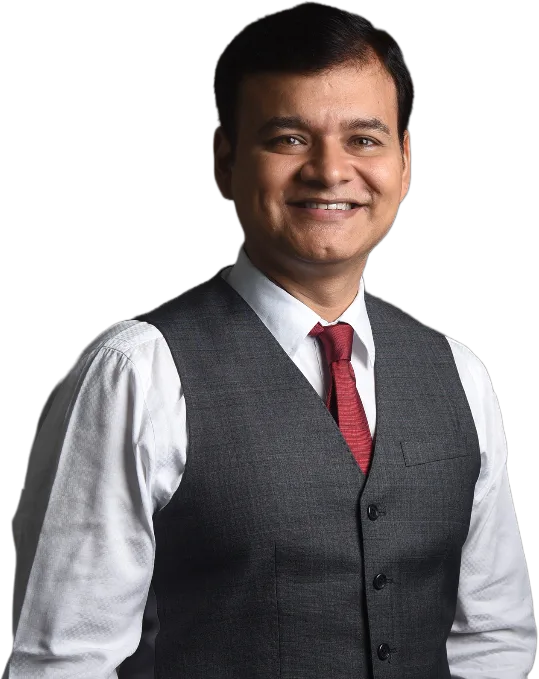
Himanshu Pandya wants families to think beyond the next fund or stock. In an interview with Foliyo co-founder Sachin Kabra, the SEBI-registered investment adviser described wealth management as an architecture: a plan that connects investment decisions to the future a family wants its wealth to support.
Pandya’s framework has four parts: investment excellence, tax discipline, legacy management and behavioural strategy. Investment choices need to account for tax at the planning, product-selection and execution stages. Legacy planning helps ensure wealth reaches the people and purposes it is meant to serve. Behavioural strategy prepares a family for the decisions and emotional triggers that may arise along the way.
Pandya said these parts compound together rather than operate as separate tasks. Portfolio construction and asset allocation matter, but they are tools for carrying out the family’s larger plan.
05:00 A portfolio should serve a purpose
As wealth grows, Pandya said, the questions change. Someone who is still building assets may focus on how much money they can accumulate. A family with substantial wealth may instead ask how to preserve it, what it should accomplish and how it should pass to the next generation.
Pandya has seen wealth become dormant or fragmented when families do not plan for its eventual use or transfer. For him, the point of a financial plan is not simply to increase a portfolio’s value; it is to help a family use its wealth deliberately over time.
15:00 Unplanned accumulation can undermine a portfolio
Pandya calls behaviour one of the biggest investor risks. Many people, he said, accumulate investments over time without designing them as a single portfolio. Individual products may look reasonable on their own while the combined holdings fail to match the family’s goals, risk tolerance or need for liquidity.
He urged investors to look at how the parts work together and to avoid chasing recent performance or reacting to every market move. A portfolio review can test whether the allocation still serves its purpose. Adding more funds or asset classes, by itself, does not guarantee better diversification.
20:00 Advice becomes more useful as decisions connect
Kabra asked when investors can manage without professional advice. Pandya’s answer centres on complexity: as investment choices connect with family needs, tax decisions, legacy plans and behaviour, it becomes harder to manage each decision in isolation.
Pandya urged investors to understand the adviser’s role, the scope of the service and how the adviser is paid. Clear responsibilities and transparent incentives help investors judge whether the advice relationship is aligned with their needs. An adviser can also bring discipline, challenge assumptions and help a family stay with a considered plan when markets become unsettling.
35:00 Manage risk instead of promising returns
Pandya rejects fixed return promises as a misleading way to plan. Investors cannot control market returns, he said, but they can decide how much risk to take and build a portfolio around the losses and volatility they can withstand. In his framing, wealth management is risk management.
He encouraged families to consider liquidity needs, time horizons and how different assets behave together. Diversification beyond a single market—including international exposure and routes such as GIFT City—can have a role when it fits the broader plan. Investors still need to understand the product and the risks attached to it.
45:00 Put a large allocation to work with a plan
When investors have a large amount to deploy, Pandya’s advice is to start with the purpose of the money and the time available to invest it. A repeatable schedule can make sense for someone who values a simple process; any more active approach needs a plan and a willingness to review it. Neither approach removes the uncertainty of short-term market moves.
Pandya’s broader point is that a well-managed financial life requires more than a list of investments. A clear purpose, coordinated decisions and a disciplined process can help families use wealth for the goals and people that matter to them.